From Concept to Victory: A Guide to Competing in NASA's University Aeronautics Competition
Overview
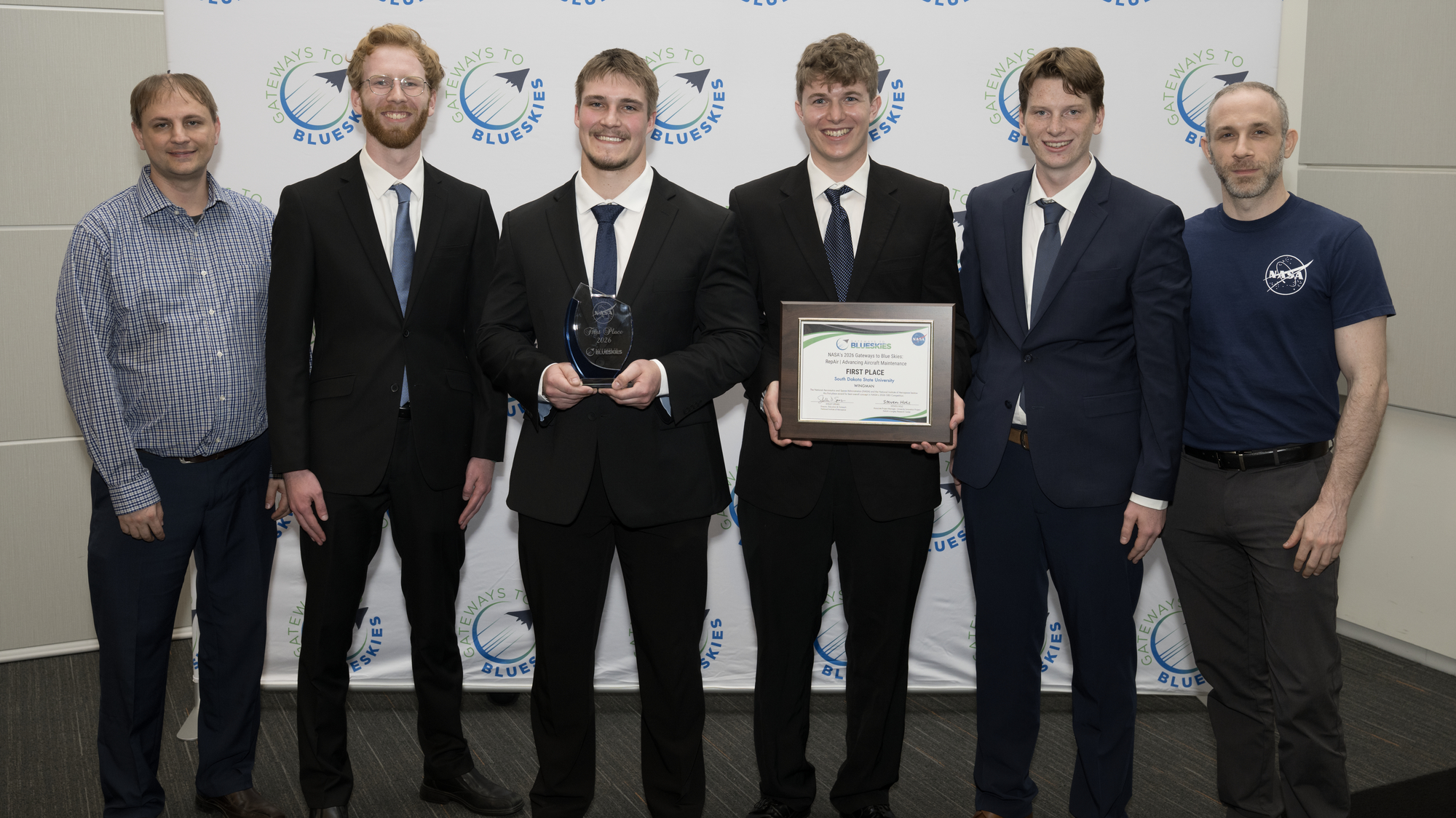
NASA's annual Gateways to Blue Skies competition challenges university teams to solve real-world aviation problems. In 2026, the theme was RepAir: Advancing Aircraft Maintenance, focusing on innovative systems to improve commercial aircraft maintenance by 2035. This tutorial walks you through the essential steps to prepare a winning entry, using the first-place project WINGMAN from South Dakota State University as a case study. By the end, you'll understand how to research, develop, pitch, and present a concept that impresses NASA judges and industry experts.
Prerequisites
Eligibility
Teams must be composed of postsecondary students (undergraduate or graduate) from accredited institutions. Advisors are allowed and often recommended. No prior NASA experience is needed, but familiarity with aeronautics or engineering helps.
Skills and Resources
- Technical knowledge: Understanding of aircraft maintenance processes, AR/VR, IoT, or automation is beneficial.
- Team diversity: Include members with engineering, computer science, business, and communications backgrounds.
- Access to labs or prototyping tools: While not mandatory, having a prototype or simulation strengthens your submission.
- Time commitment: Expect 3–6 months of work, including research, design, and practice presentations.
Step-by-Step Instructions
Step 1: Understand the Competition Theme
Each year, NASA announces a specific challenge. For 2026, the theme was RepAir: Advancing Aircraft Maintenance. Read the official prompt carefully—it defines the problem scope, stakeholders, and desired outcomes. The prompt mentioned developing systems or practices that could be implemented by 2035. Jump to Common Mistakes to avoid misinterpreting the theme.
Step 2: Assemble Your Team
The WINGMAN team consisted of four students and one advisor. Seek members with complementary skills: at least one technical lead, one researcher, and one presenter. The advisor (Todd Letcher) provided guidance without doing the work. Recruit early and assign roles based on strengths.
Step 3: Develop Your Concept
Identify a specific pain point in aircraft maintenance. The WINGMAN team focused on routine daily servicing and minor repairs, where mechanics often juggle paper manuals, documentation, and photo logs. They proposed augmented reality safety glasses with voice-controlled manuals, automatic documentation, and photo recognition. Follow this process:
- Research current practices: Interview mechanics, read FAA reports, and review NASA literature on aviation workforce challenges.
- Brainstorm innovations: Use brainstorming tools like mind maps. Ensure your idea is novel yet feasible by 2035.
- Create a system architecture: Outline components—hardware (glasses, sensors), software (voice recognition, database), and user interface.
- Validate with experts: Consult professors or industry partners to refine your concept.
Step 4: Build a Prototype or Simulation
While NASA does not require a working prototype, demonstrating a functional model impresses judges. For WINGMAN, they might have created a mockup or software simulation. Use tools like Unity for AR or Raspberry Pi for hardware. Write code snippets for key features, e.g., voice command processing:
import speech_recognition as sr
def listen_for_command():
    recognizer = sr.Recognizer()
    with sr.Microphone() as source:
        audio = recognizer.listen(source)
        try:
            command = recognizer.recognize_google(audio)
            return command
        except sr.UnknownValueError:
            return "Could not understand"
Step 5: Prepare Your Presentation
The competition culminates in a forum at NASA Langley Research Center. Your presentation must be clear, concise (15–20 minutes), and visually engaging. Include:

- Problem statement – Why aircraft maintenance needs improvement.
- Solution overview – How your system works, with diagrams.
- Technical details – Underlying technology (AR, AI, cloud).
- Implementation timeline – Roadmap to 2035.
- Impact – Expected benefits in safety, efficiency, and workforce.
Step 6: Practice and Refine
Rehearse with your advisor and peers. Anticipate judge questions—they will ask about cost, scalability, and risks. The WINGMAN team likely emphasized hands-free access and reduced error rates. Record practice sessions and improve based on feedback.
Step 7: Deliver at the Forum
During the two-day event, present your research, network with NASA and FAA experts, tour the center, and attend other team presentations. The 2026 forum was livestreamed, so be professional on camera. Engage with judges during Q&A. Winners receive internship opportunities at NASA aeronautics centers.
Common Mistakes
- Misreading the theme: Some teams propose ideas outside the 2035 timeframe or ignore the maintenance focus. Always align with the prompt.
- Over-engineering the solution: Adding too many features without core functionality. WINGMAN stuck to three core features: voice manuals, auto-documentation, photo recognition.
- Weak validation: No evidence that your idea works or addresses real needs. Conduct surveys or small experiments.
- Poor presentation skills: Relying too heavily on slides, mumbling, or ignoring the audience. Practice public speaking.
- Ignoring workforce implications: The judges cared about easing shortages and improving safety. Address workforce challenges explicitly.
- Not networking: The forum offers chances to connect with mentors and potential employers. Use them.
Summary
Winning NASA's Gateways to Blue Skies competition requires careful preparation: understanding the theme, assembling a diverse team, developing a feasible and innovative concept, creating a prototype or simulation, and delivering a compelling presentation. The WINGMAN team succeeded by focusing on a practical, AR-based solution to aircraft maintenance. Follow these steps, avoid common pitfalls, and you could be next year's winner—and earn an internship at a NASA research center.
Related Articles
- Colombia Summit Seeks to Reignite Fossil Fuel Transition as COP Talks Stall
- Global Forest Loss Plunges by Third, but Targets Remain Elusive
- The Hidden Secrets of Stargazing: Insider Tips for Sky Watchers
- How to Prepare a Moon Lander for Lunar Surface Operations
- Ancient Hypervelocity Star DESI-HVS1: Uncovering a Runaway from the Galactic Core
- NASA Opens Bidding for Mars Telecom Network – Industry Must Deliver by 2030
- Rediscovering the Nexus 6: How a 12-Year-Old Motorola Phone Redefined Smartphone Design
- 10 Ways Amazon WorkSpaces Gives AI Agents Their Own Desktop (and Why It Matters)