The Inner Spark: New Insights into What Causes Lightning
For centuries, lightning has both fascinated and frightened humanity. Its sudden, brilliant flashes and thunderous roars were once attributed to the whims of gods. Today, we know it's a powerful natural electrical discharge. But the precise mechanism behind lightning's ignition is more complex and intriguing than the simple static electricity model taught in school. Recent research, including the work of physicist Joseph Dwyer, has dramatically reshaped our understanding. This article explores the classic theory and the exciting new discoveries that explain what truly causes a lightning bolt.
The Traditional View: Static Electricity in the Sky
The long-held explanation for lightning is the electrostatic separation theory. Within a thunderstorm cloud (a cumulonimbus), updrafts and downdrafts cause collisions between ice crystals and soft hail particles (graupel). These collisions transfer charge: lighter ice crystals become positively charged and are carried upward, while heavier graupel becomes negatively charged and sinks. This process separates the cloud into a positive upper region and a negative lower region. The immense electric field that builds up eventually overcomes the insulating properties of the air, leading to a sudden discharge—a lightning bolt.
This idea has been a solid foundation for decades. However, it left a crucial question unanswered: How does the electric field actually become strong enough to break down air? Air is an excellent insulator; it requires an electric field of about 3 million volts per meter to create a spark. But measurements within thunderstorms consistently find fields that are an order of magnitude weaker—roughly 10 times less than needed. Something else must be at work.
Enter the Runaway Breakdown Theory
In the 1920s, physicist C.T.R. Wilson proposed that high-energy particles from cosmic rays could trigger lightning. This idea lay dormant for decades until researchers like Joseph Dwyer revived and refined it into the runaway breakdown (or relativistic runaway electron avalanche) theory.
Cosmic Rays as Seed Particles
Our planet is constantly bombarded by high-energy particles from outer space—cosmic rays. When these particles strike the upper atmosphere, they produce showers of secondary electrons, positrons, and gamma rays. Dwyer's work, initially focused on solar flares using NASA's Wind satellite, gave him a unique perspective on how such energetic particles behave. When he moved to Florida—one of the most lightning-prone regions on Earth—he applied this knowledge to terrestrial lightning.
According to the runaway breakdown theory, a small fraction of these secondary electrons can be accelerated to near-light speeds by the thunderstorm's electric field. These relativistic electrons then collide with air molecules, knocking off more electrons in an avalanche effect, much like a chain reaction. This process rapidly multiplies the number of free electrons and creates a plasma channel through which the main lightning discharge can travel. It elegantly explains why lightning can initiate in fields far weaker than the classic breakdown threshold.
Evidence from the Sky: Terrestrial Gamma-ray Flashes
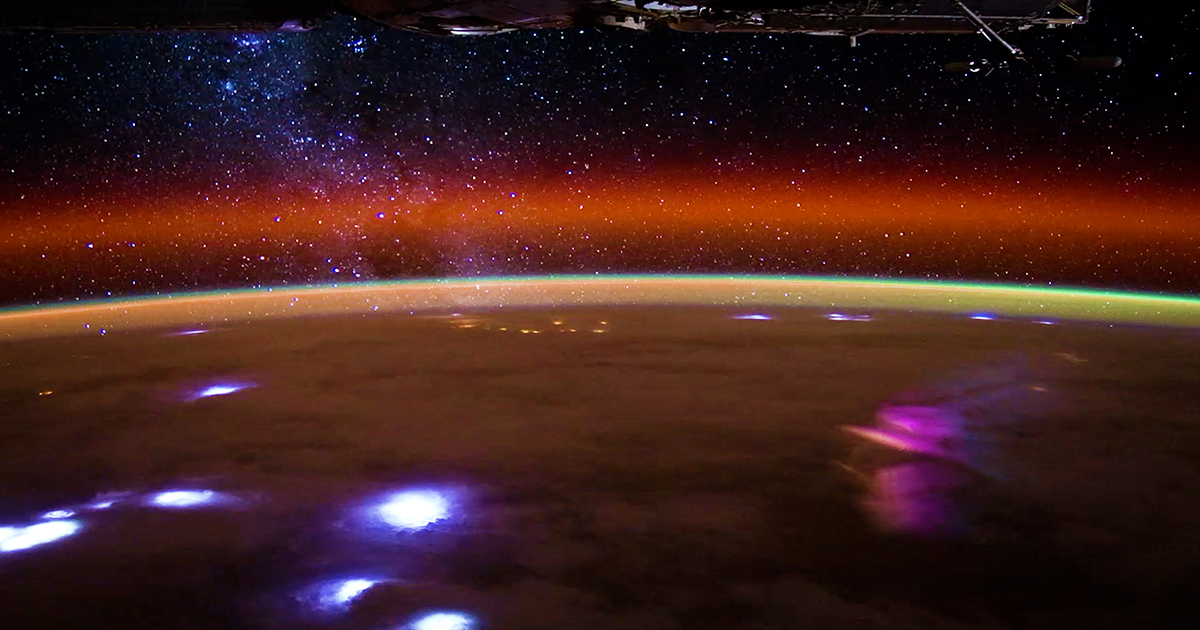
Additional evidence for the runaway breakdown theory came from an unexpected source: space. Starting in the 1990s, NASA satellites detected brief, intense bursts of gamma rays coming from Earth's thunderclouds. These Terrestrial Gamma-ray Flashes (TGFs) are exactly the signature predicted by the runaway avalanche of relativistic electrons. The discovery of TGFs strongly supports the idea that lightning initiation involves high-energy physics, not just static electricity.
A New Twist: The Binary Merging Hypothesis
Despite the success of the runaway breakdown theory, it still required a pre-existing electric field strong enough to start the avalanche. But how does that initial field form? Recent research, including that of Dwyer and colleagues, has proposed a surprising answer: lightning may be triggered by the merger of two separate electrical discharges within the same cloud. This is sometimes called the binary merging or collapse of a hydrometeor (water/ice particle) system.
Imagine two small regions of opposite charge—like tiny sparks—forming near each other. Normally, they would be too small and the field too weak to cause a full lightning stroke. But if these two small leader channels physically approach and merge, their combined electric field can suddenly exceed the critical threshold. The merger acts as a trigger, initiating the runaway breakdown that leads to the main bolt. This idea explains why lightning often appears to start abruptly from a point deep inside the cloud, rather than building slowly across a wide area.
Ongoing Research: Airborne Missions and Future Questions
Scientists are now testing these theories with direct observations. Projects like the Airborne Lightning Observatory for FEGS and TGFs (ALOFT) fly research aircraft into the tops of thunderclouds—Dwyer himself has participated in such flights. The aircraft carry instruments to measure electric fields, gamma rays, and radio emissions. Initial results show that the upper layers of storms are far more electrically complex than models predicted, with rapid field fluctuations and numerous small discharges that may be the precursors to full lightning.
Open questions remain:
- How exactly do small discharges merge within the cloud?
- What role do particular forms of precipitation (e.g., supercooled water droplets) play in charge separation?
- Can we predict lightning strikes more accurately using these physical insights?
Conclusion: A Fuller Picture of a Familiar Phenomenon
The causes of lightning are no longer a simple story of static electricity. The journey from a storm cloud's internal collisions to the brilliant flash we see involves cosmic rays, relativistic avalanches, and possibly merging micro-discharges. As researchers like Joseph Dwyer continue to push the boundaries, each answer reveals new layers of complexity. The next time you see a lightning bolt, you'll know that its spark began not just in the cloud, but with particles from the far reaches of the universe.
Related Articles
- How to Keep Human Connections Alive When AI Automates Your Team's Micro-Interactions
- Thor: 15 Years Later – How Marvel’s First God of Thunder Film Remains the Gold Standard
- Understanding the Surge in Indiana Gas Prices: A Comprehensive Guide
- Major 2022 Hawaii Eruption Provides Key to Unlocking Venus's Volcanic Activity
- Social Media Gambling Ad Exposure Disproportionately Affects Men, Reports Cambridge Study
- Bohmian Mechanics Returns: New Test Could Finally Reveal the True Nature of Reality
- Breakthrough: Gravitational Wave Detectors Gain 'Autotune' Ability to Hear Fainter Cosmic Ripples
- 6 Surprising Facts About Samsung Browser's New Toolbar Blur Effect