Mars ESCAPADE Mission: Insights from Dr. Robert Lillis on This Week in Space Podcast
Exploring the Red Planet’s Atmosphere: A Deep Dive into the ESCAPADE Mission
Space exploration continues to captivate our imagination, and few topics are as compelling as the quest to understand Mars. In Episode 210 of the acclaimed This Week in Space podcast, hosts Rod Pyle and Tariq Malik sat down with Dr. Robert Lillis, a leading scientist from the University of California, Berkeley, to discuss the upcoming Mars ESCAPADE mission. This conversation offers a rare, insider look at one of NASA’s most ambitious efforts to unravel the mysteries of the Martian atmosphere. Whether you’re a seasoned space enthusiast or a curious newcomer, the episode delivers a fascinating blend of science, engineering, and human innovation.
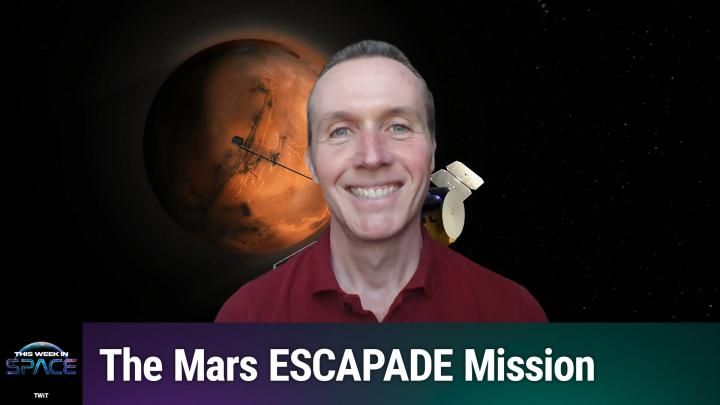
Episode 210: A Conversation with Dr. Robert Lillis
In this special episode, Rod and Tariq welcomed Dr. Lillis, the principal investigator for the ESCAPADE (Escape and Plasma Acceleration and Dynamics Explorers) mission. The discussion covered everything from the mission’s scientific goals to the technical challenges of sending twin spacecraft to Mars. Dr. Lillis shared his personal journey into space science and the collaborative effort behind the mission. The hosts skillfully guided the conversation, making complex topics accessible while preserving the excitement of discovery. Listeners learned how ESCAPADE will build on previous missions like MAVEN to deepen our understanding of how Mars lost its atmosphere over billions of years.
The ESCAPADE Mission: Twin Orbiters on a Quest for Answers
ESCAPADE is a NASA-funded mission set to launch in the coming years, consisting of two identical small satellites, or smallsats, that will orbit Mars. Their primary goal is to study the planet’s upper atmosphere and its interaction with the solar wind. By measuring the escape of ions and neutral particles, the mission aims to answer a key question: How did Mars transition from a warm, wet world to the cold, dry desert we see today? Dr. Lillis emphasized that the twin-spacecraft design allows for simultaneous measurements at different locations, providing a 3D view of the atmospheric escape process. This approach represents a significant leap forward from previous single-spacecraft missions.
Scientific Objectives and Instruments
The mission focuses on three core scientific objectives:
- Measure the rate of atmospheric escape under different solar conditions, including solar storms and quiet periods.
- Characterize the plasma environment around Mars, including the bow shock, magnetosheath, and tail region.
- Study the drivers of escape, such as the solar wind’s magnetic field and extreme ultraviolet radiation.
To achieve these goals, each spacecraft carries a suite of instruments, including an ion mass spectrometer, a magnetometer, and an electrostatic analyzer. Dr. Lillis explained how these tools work together to paint a comprehensive picture of the Martian upper atmosphere.
Key Insights from the Interview
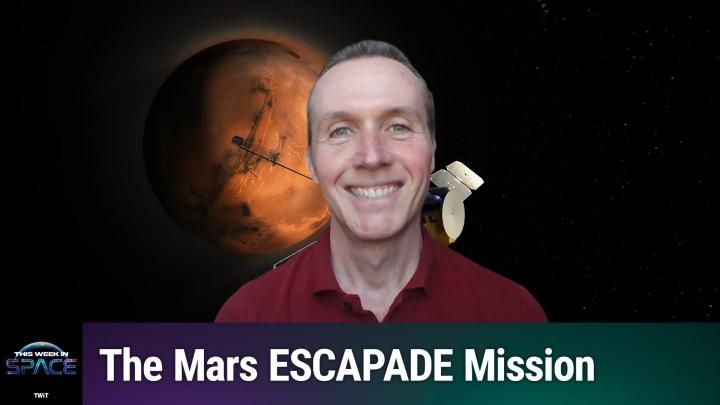
During the podcast, Dr. Lillis shared several memorable insights. He discussed the importance of “flying two spacecraft together” to disentangle spatial and temporal variations—something MAVEN could not do alone. He also addressed the challenges of building and testing small satellites for deep space, highlighting the innovative engineering that enables cost-effective science. Rod and Tariq pressed him on the implications for human exploration: understanding atmospheric escape is crucial for planning future crewed missions, as it affects surface radiation levels and potential resource utilization. Dr. Lillis conveyed optimism about the mission’s potential to reshape our understanding of Mars’s climate history.
The Human Element
Beyond the science, the episode offered a glimpse into the human side of space exploration. Dr. Lillis described the excitement of working with a diverse team of engineers and scientists, and the thrill of seeing the spacecraft take shape. He emphasized that missions like ESCAPADE represent the culmination of years of dedication—from proposal writing to instrument calibration. The hosts wrapped up by discussing the broader context of Mars exploration, including the upcoming Mars Sample Return campaign and the Artemis program’s lunar ambitions. The conversation served as a reminder that each mission builds on the last, creating a legacy of discovery.
Why ESCAPADE Matters
Mars is at the center of international space exploration plans, with multiple nations sending orbiters, landers, and soon, humans. Understanding the planet’s atmosphere is not just an academic exercise—it has practical implications for sustained presence. Earth’s magnetic field protects our atmosphere from being stripped away; Mars lacks such a global field. ESCAPADE will provide data that can help model how much and how quickly Mars continues to lose its atmosphere, which in turn affects its potential for life and habitability. Dr. Lillis summed it up best: “We’re exploring a process that has shaped not just Mars, but all planets with atmospheres.”
Listen to the Full Episode
You can find Episode 210 of This Week in Space on all major podcast platforms, including Apple Podcasts, Spotify, and the website of the show’s publisher, Space.com. The podcast regularly features interviews with astronauts, scientists, and engineers, making it a must-listen for anyone passionate about space. Be sure to subscribe to catch future episodes, including follow-ups on ESCAPADE as the mission approaches launch.
Conclusion: A New Chapter in Martian Exploration
Rod Pyle and Tariq Malik’s conversation with Dr. Robert Lillis offers an inspiring preview of the ESCAPADE mission. With its twin orbiters poised to unlock the secrets of Mars’s atmospheric escape, the mission stands as a testament to human ingenuity and curiosity. This episode of This Week in Space is not just a recounting of facts—it’s a window into the passion and teamwork that drive space science forward. As we await ESCAPADE’s launch, this podcast provides the perfect primer on what to expect and why it matters.
Related Articles
- Navigating the Moon's Colossal Crater: A How-To Guide for Artemis Mission Planners
- GRASP: Practical Long-Horizon Planning with World Models
- Beyond Gender Stereotypes: The Science of Resource Seeking in Relationships
- From Period Drama to Hard Sci-Fi: A Guide to 'For All Mankind's Genre Evolution
- VECT Ransomware: A Critical Flaw Turns Ransomware into Unintentional Data Wiper
- The Fast16 Malware: A Precision Sabotage Tool Uncovered
- Breakthrough Quantum Algorithm Cracks Decades-Old Materials Puzzle in Seconds
- 5 Key Reasons I Couldn't Stick with the Galaxy S26 Ultra's Display