10 Revelations About the Vera C. Rubin Observatory: The Maverick Eye on the Sky
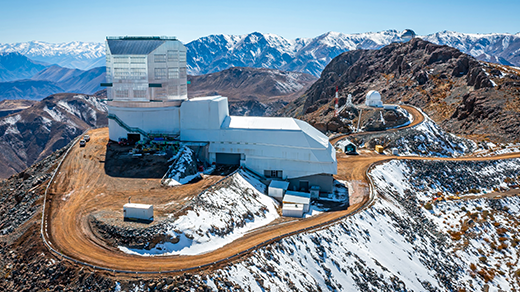
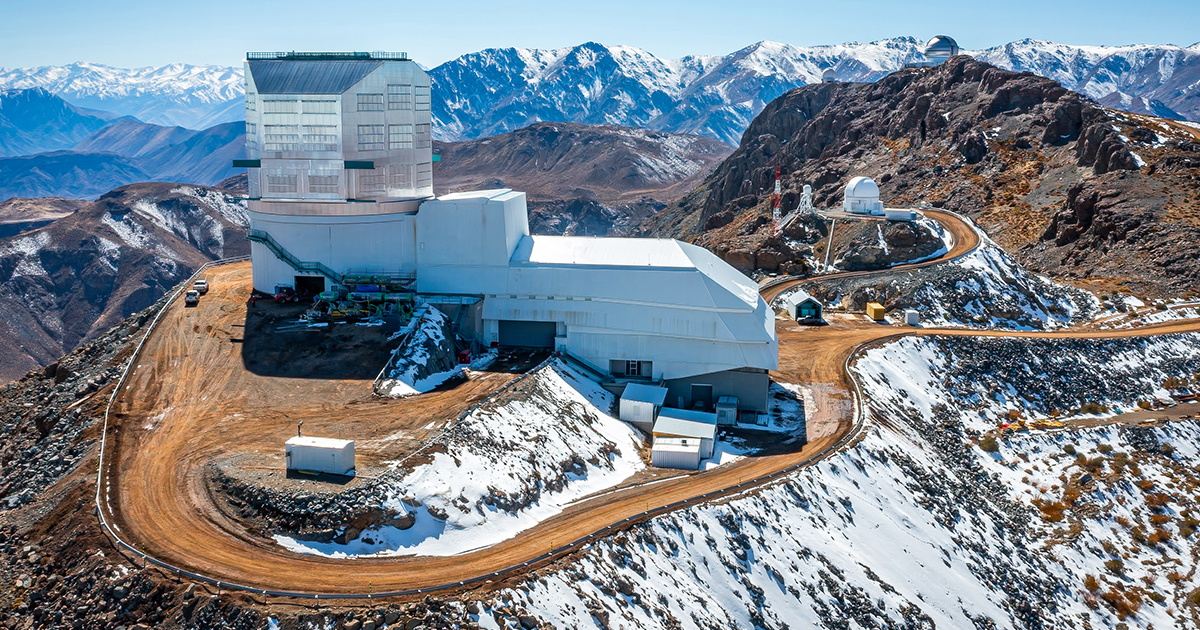
After decades of planning and construction, the Vera C. Rubin Observatory—perched high in Chile’s Atacama Desert—is finally poised to transform our view of the cosmos. Originally dreamed up in the mid-1990s as the “Dark Matter Telescope,” this revolutionary facility will capture the entire southern sky in unprecedented detail every few nights for ten years. Its mission: to track everything from city-block-sized asteroids to failed supernovae and interstellar wanderers. Here are ten key insights into what makes Rubin a game-changer for astronomy and how it will rewrite our understanding of the universe.
1. A Telescope Born from the Quest for Dark Matter
Rubin’s roots trace back to the 1990s, when scientists first proposed a telescope dedicated to probing dark matter. Originally called the Dark Matter Telescope, the project evolved into a massive survey machine. Its 8.4-meter mirror and 3.2-gigapixel camera—the largest ever built—are engineered to map the distribution of dark matter by measuring weak gravitational lensing. Every galaxy’s shape is slightly distorted by invisible mass, and Rubin will measure these subtle warps for billions of galaxies, creating the most detailed dark matter map ever. This foundational goal remains central, but the telescope’s capabilities extend far beyond a single mystery.
2. The Ultimate Time-Lapse of the Sky
Over ten years, Rubin will take roughly 1,000 images of every patch of the southern sky—about 200,000 total exposures. Each image covers an area 40 times the size of the full moon. This repeated coverage allows the telescope to detect changes: moving objects, brightening stars, fading supernovae, and fleeting transients. By comparing images night after night, Rubin will create a dynamic movie of the universe. Astronomers call this the Legacy Survey of Space and Time (LSST), and it will produce petabytes of data—more than any previous astronomical survey combined.
3. Hunting Skyscraper-Sized Asteroids
One of Rubin’s most urgent jobs is finding near-Earth objects (NEOs) large enough to cause regional devastation. Asteroids bigger than 140 meters—roughly the size of a skyscraper—are the top priority. Current surveys have found fewer than half of the estimated 25,000 such objects in near-Earth space. Rubin’s deep, fast scans will discover up to 90% of them, tracking their orbits to assess impact risk. It will also spot millions of main-belt asteroids, many never seen before. This data is vital for planetary defense and understanding the solar system’s history.
4. Uncovering Failed Supernovae
Not all stellar deaths end in brilliant explosions. Some massive stars collapse directly into black holes without a visible supernova—these are called “failed supernovae.” Rubin’s ability to monitor hundreds of millions of galaxies will catch the sudden disappearance of a star as it falls into darkness. By comparing before-and-after images, astronomers can pinpoint these rare events, which are critical for understanding how the most massive stars die and seed black hole mergers. Rubin is expected to detect dozens of such events, a hundredfold increase over current capabilities.
5. Welcome to the Interstellar Visitor Club
Since the discovery of ‘Oumuamua in 2017 and Borisov in 2019, we know asteroids and comets from other star systems pass through our solar system. Rubin will revolutionize this field by detecting dozens of interstellar objects every year. Its wide field and rapid cadence mean it will spot fast-moving, faint objects before they disappear. By studying their compositions and trajectories, scientists can learn about the building blocks of exoplanetary systems. Rubin’s data will turn interstellar visitors from a curiosity into a routine catalog.
6. Watching Supernovae Ignite in Real Time
Rubin will observe millions of supernovae over its decade-long survey, including Type Ia supernovae used to measure cosmic distances. Unlike other surveys that catch explosions days or weeks later, Rubin can detect the very first moments of a supernova’s light curve—the “shock breakout.” This early data is crucial for understanding progenitor systems and explosion physics. By monitoring the entire sky every few nights, Rubin will alert astronomers to fresh supernovae within hours, enabling follow-up by other telescopes. Expect groundbreaking discoveries about how stars explode.
7. Probing Dark Energy with Baryon Acoustic Oscillations
Dark energy, the mysterious force accelerating cosmic expansion, is a prime target for Rubin. By mapping the 3D distribution of galaxies over billions of light-years, Rubin will use baryon acoustic oscillations (BAO) as a standard ruler. BAO are imprints from sound waves in the early universe, frozen into galaxy patterns. Rubin’s huge volume of galaxy positions—billions of them—will allow the most precise measurement of BAO yet, tracking how dark energy has changed over time. This could reveal whether dark energy is constant or evolving, a key question for cosmology.
8. A Firehose of Transient Phenomena
Beyond asteroids and supernovae, Rubin will detect an avalanche of transient events: tidal disruption events (stars ripped apart by black holes), kilonovae from neutron star mergers, active galactic nuclei flares, and microlensing events. Its alert system will issue up to 10 million alerts per night to the global community. Automated telescopes will then follow up the most interesting targets. This real-time sky monitoring will turn astronomy into a living, breathing science, where discoveries happen nightly rather than after long data analysis.
9. The Data Deluge and Public Access
Rubin will generate 20 terabytes of data each night—more than the entire internet traffic of a small country. All raw and processed data will be made publicly available through the Rubin Science Platform. Citizen scientists, students, and professional researchers alike can explore images, light curves, and catalogs. This open-data philosophy accelerates discovery and democratizes astronomy. The sheer volume also demands new machine learning algorithms to classify objects and detect anomalies. Rubin isn’t just a telescope; it’s a big data challenge that will advance computational science.
10. A Legacy That Will Last Generations
The Vera C. Rubin Observatory is named after pioneering astronomer Vera Rubin, who provided the first evidence for dark matter. Her legacy of curiosity and perseverance is embodied in a facility that will answer questions we haven’t yet thought to ask. The 10-year survey will produce a static reference catalog of 37 billion celestial objects, plus billions of variable source light curves. This dataset will fuel research for decades, even after the telescope shuts down. Rubin is not just a new instrument—it’s a new window on the universe that will forever change how we see the cosmos.
From skyscraper-sized asteroids to the faintest ripples of dark energy, the Vera C. Rubin Observatory promises to reshape astronomy. Its comprehensive sky survey will deliver a wealth of discoveries, many of which are bound to surprise us. As Rubin begins its ten-year watch, the world of science stands ready for a revolution—a nonstop, high-definition movie of the changing heavens. This is the dawn of a new era in time-domain astronomy.
Related Articles
- 10 Critical Insights for Reviewing Agent-Generated Pull Requests
- Decoding the Skies: A Guide to the Latest UAP Document Release
- How to Witness and Photograph the Flower Moon and the Rare Blue Moon in May
- A Comprehensive Guide to Starship V3’s First Orbital Launch: What to Expect and How It Works
- Before Spears and Axes: How the Simple Container Revolutionized Early Human Survival
- Pentagon Partners with Seven Major Tech Firms to Deploy AI on Classified Military Systems
- The Science of Lightning: How Charge Builds and Discharges in the Atmosphere
- Cambrian Fossil Discoveries Illuminate the Dawn of Animal Evolution