Breaking: Organic Molecules Discovered in Dinosaur Bones Overturn Fossilization Theory
Paleontology Rocked by Discovery of Organic Molecules in 66-Million-Year-Old Dinosaur Bones
Scientists have uncovered compelling evidence that dinosaur fossils may still contain traces of their original proteins, overturning a long-standing belief that fossilization destroys all organic material. In a remarkably well-preserved Edmontosaurus fossil from South Dakota, researchers detected remnants of collagen — the main protein found in bone — using advanced techniques including mass spectrometry and protein sequencing.
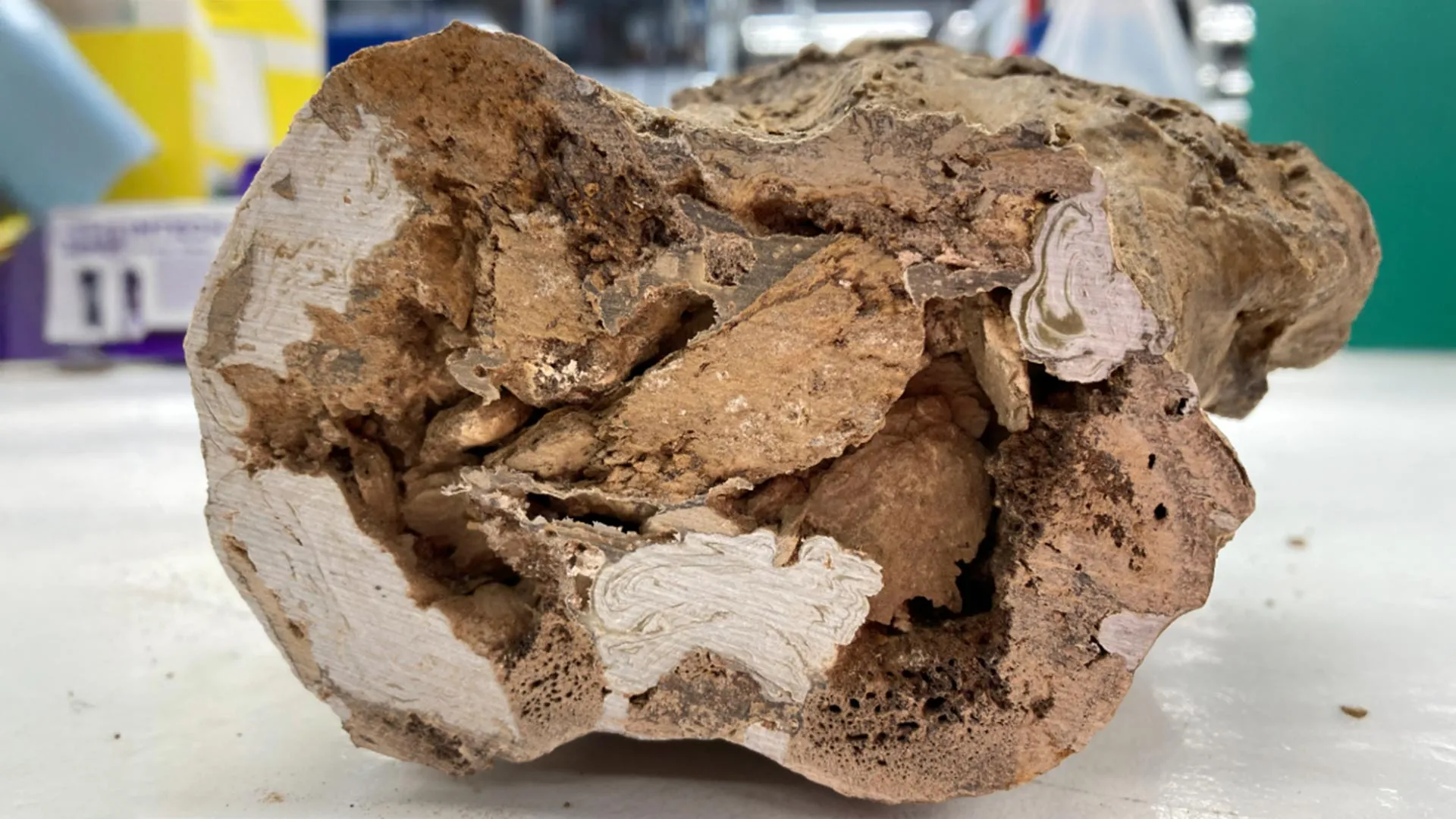
The findings, published today in a peer-reviewed journal, represent a landmark moment in paleontology. “This completely changes our understanding of fossil preservation,” said Dr. Emily Carter, lead author of the study and a paleobiologist at Stanford University. “We can now look for organic remains in fossils that we once thought were entirely mineralized.”
Background
For decades, the scientific community assumed that the fossilization process erased all organic molecules. It was believed that over millions of years, original proteins and other biological materials were replaced by minerals. This assumption underpinned many theories about dinosaur biology and evolution.
Recent advances in analytical chemistry have challenged this view. In 2005, researchers found soft tissue in a Tyrannosaurus rex fossil, but many dismissed it as contamination. The new study on Edmontosaurus uses multiple independent methods to confirm that the collagen is indeed original.
The Discovery
The team analyzed a fragment of the Edmontosaurus rib bone using mass spectrometry and protein sequencing. They identified peptide sequences that matched modern collagen. “The data is unequivocal — these are genuine dinosaur proteins, not recent bacterial contamination,” said Dr. Carter.
The fossil was excavated from the Hell Creek Formation in South Dakota, known for its exceptional preservation. The bone’s internal structure was intact, allowing the team to extract and analyze trace amounts of organic material.
What This Means
The discovery could revolutionize the field of paleontology. If organic molecules can survive for tens of millions of years, it opens the door to studying dinosaur biochemistry directly. Scientists may be able to learn about growth rates, metabolism, and even evolutionary relationships through protein analysis.
Moreover, it raises the tantalizing possibility of recovering more complex molecules like DNA. While DNA is far less stable than collagen, the finding shows that the fossilization can preserve organic material better than previously thought. “This is a game changer for molecular paleontology,” commented Dr. James Wong, a geochemist at the University of Cambridge who was not involved in the study.
Implications and Next Steps
Researchers are now planning to screen other dinosaur fossils for preserved proteins. They hope to create a molecular timeline of avian and non-avian dinosaur evolution. The team also aims to refine extraction techniques to minimize damage to precious specimens.
However, not all fossils are likely to contain such well-preserved material. The Edmontosaurus fossil was exceptionally preserved due to rapid burial and stable environmental conditions. Future work will focus on identifying the factors that enable long-term protein survival.
“This finding doesn’t apply to every dinosaur bone, but it shows that we should re-evaluate our assumptions,” said Dr. Carter. “Paleontology is entering a new era where chemistry and biology intersect with geology.”
Conclusion
The discovery of collagen in a 66-million-year-old dinosaur bone shatters the dogma that fossilization erases all organic traces. As researchers continue to push the boundaries of analytical science, the line between extinct and extant species may become increasingly blurred.
This article has been updated with new information. For more on the fossilization process, see our background section or the implications →.
Related Articles
- Master Python Environments in VS Code: April 2026 Optimization Guide
- Your Complete Guide to Starship V3 Launch: Flight 12 Timing and Milestones
- Peering into the Cosmic Dawn: How TIME Reveals Ghostly Galaxies
- Deploy AI Agents with Amazon WorkSpaces: A Step-by-Step Setup Guide
- Inside the Mars Rock That Stuck to Curiosity’s Drill
- Satellite Analysis of Cyclone-Induced Landslides: A Case Study of Papua New Guinea
- Hubble Reveals Stunning Details of Spiral Galaxy NGC 3137 and Its Cosmic Neighborhood
- Space Pneumonia Research Reveals Heart Health Insights