The Cosmic Triangle: A Step-by-Step Guide to Viewing Mars, Saturn, and the Moon on May 14
Overview
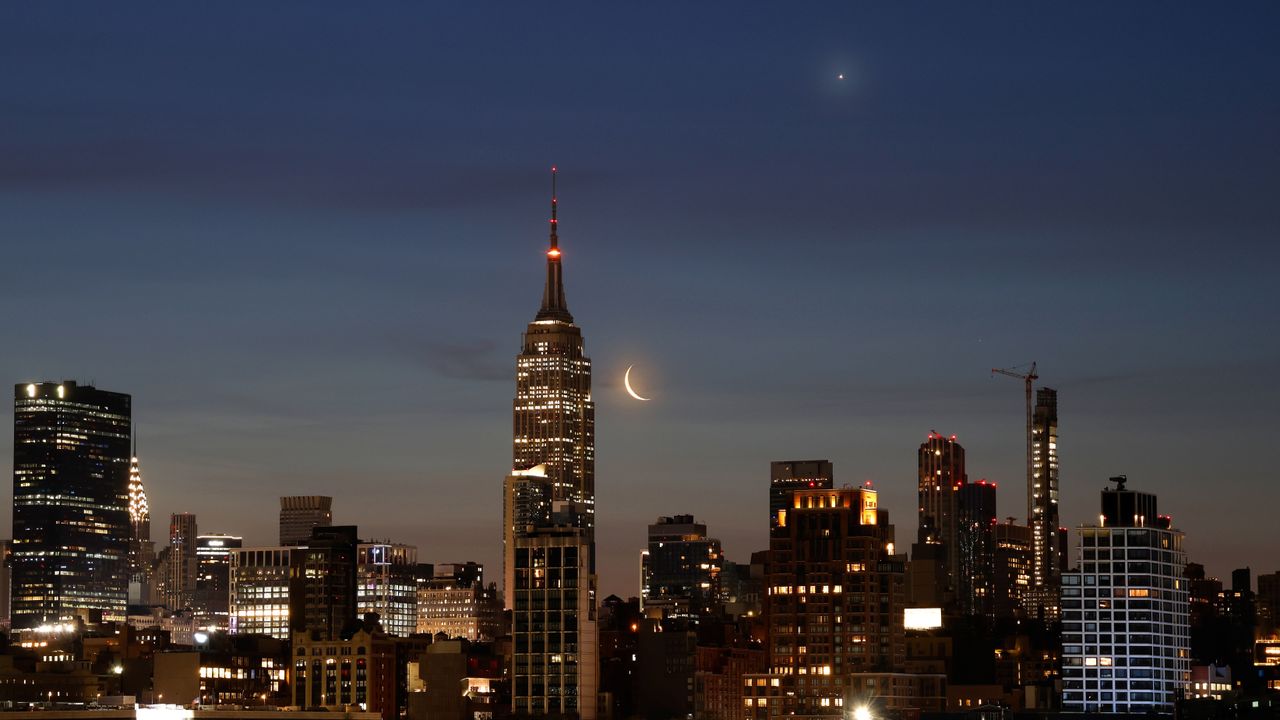
On the morning of May 14, a stunning celestial trio will grace the pre-dawn sky: a razor-thin crescent Moon pairing with the planets Mars and Saturn. This arrangement forms a tight triangle that you can see with the naked eye, though binoculars or a small telescope will reveal even more detail. The event occurs low in the east, just as the Sun is about to rise, so timing and location are critical. In this guide, we’ll walk you through everything you need to know to catch this cosmic triangle – from preparation to viewing to common pitfalls.
Prerequisites
Essential Tools & Conditions
- Clear skies – Check your local weather forecast for May 14 morning. Any clouds near the eastern horizon will block the view.
- Unobstructed eastern horizon – The objects will be low (10–15 degrees above the horizon) in the glow of dawn. Avoid buildings, trees, or hills in that direction.
- Binoculars or a telescope (optional but recommended) – Naked eyes will see the crescent Moon and two “stars,” but binoculars reveal the Moon’s craters and Saturn’s rings (through a telescope).
- Your exact location and time – Sunrise times vary by longitude and time zone. Know your local sunrise time.
- A star chart or astronomy app – Apps like Stellarium, SkySafari, or even Google Sky Map help you confirm which dots are planets.
Sky Conditions
This event is visible from most of Earth, but best for mid‑northern latitudes. The Moon will be only 3.3% illuminated, so twilight will quickly wash it out. You need to be ready before the sky gets too bright.
Step‑by‑Step Instructions
1. Find Your Local Time Window
On May 14, the Moon, Saturn, and Mars will be closest together roughly 40 to 30 minutes before local sunrise. Use an app or website (e.g., timeanddate.com) to get the exact sunrise time for your city. Plan to be at your viewing spot at least 50 minutes before sunrise to allow for setup.
2. Scout a Good Location
Choose a spot with a low, flat eastern horizon. A beach, open field, hilltop, or a high balcony works well. If you live in a city, try a park or rooftop that avoids streetlights pointing east.
3. Start Looking East
About 45 minutes before sunrise, face east. The crescent Moon will be the brightest object in that region – a very thin, faint sliver with the “dark” part of the Moon faintly glowing (due to Earthshine). Right next to the Moon you’ll see two bright “stars” forming a triangle: Saturn (upper left of the Moon) and Mars (upper right of the Moon, closer to the horizon).
4. Confirm with Binoculars
Binoculars (7×50 or 10×42) will show the Moon’s craters and the planets as tiny disks. Saturn may reveal its rings if you have a telescope at 30× magnification. Mars will appear reddish, while Saturn shines with a steady yellowish light.
5. Observe the Triangle’s Evolution
Over the next 20 minutes, the triangle will slowly change shape as the Moon moves eastward (its orbital motion). The crescent will become harder to see as dawn brightens. By about 15 minutes before sunrise, the Moon may be barely visible against the blue sky.
6. Try Photography
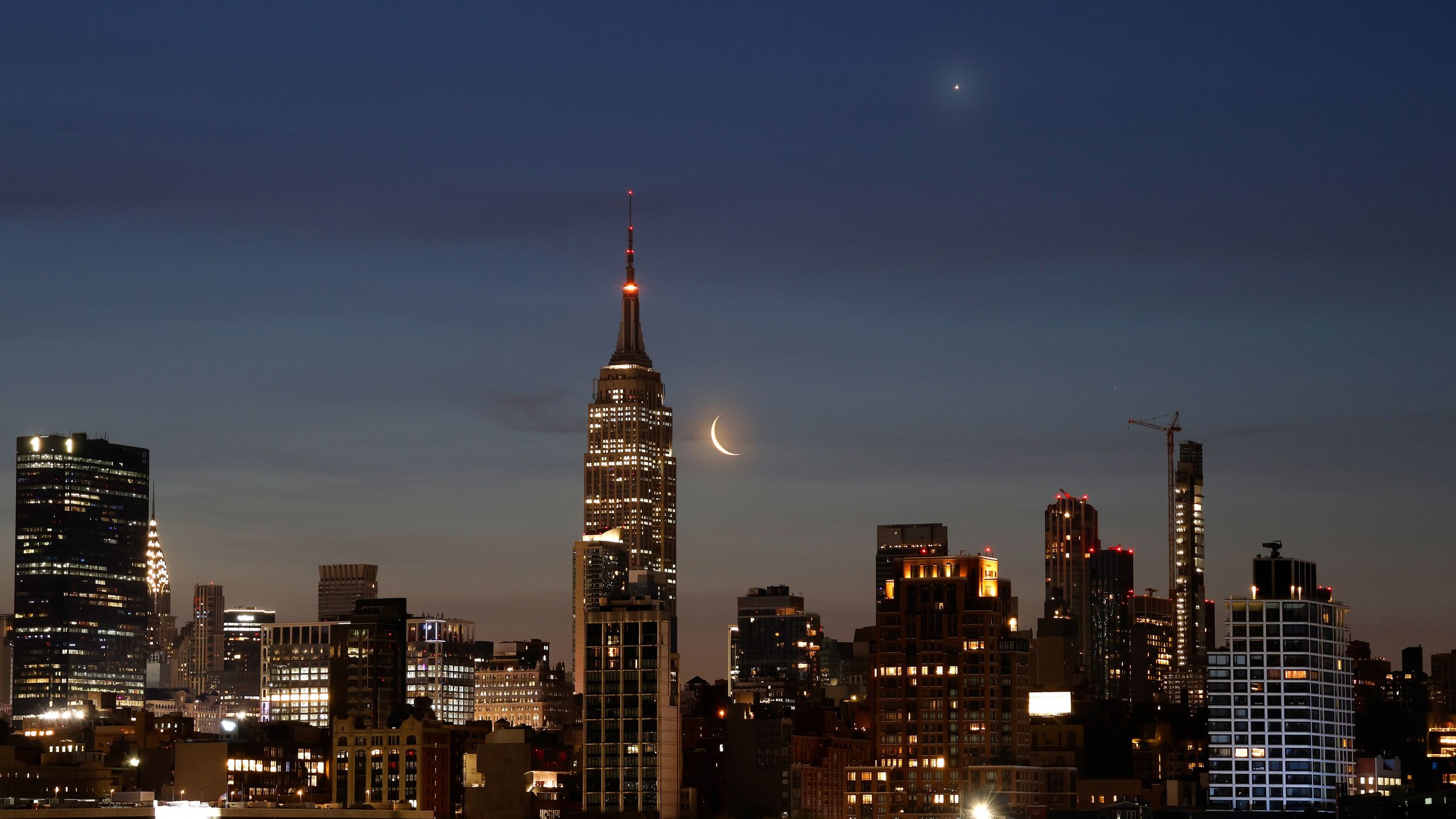
If you want to capture the triangle, use a DSLR or mirrorless camera with a telephoto lens (100–200mm). Set ISO 800–1600, aperture f/5.6–f/8, and a shutter speed of 1/2 to 1 second. Focus manually on the Moon. A tripod is essential. For smartphones, use a tripod adapter and Pro mode with manual focus.
Common Mistakes
Mistaking Bright Stars for Planets
The triangle includes only three objects: the Moon, Mars, and Saturn. If you see a fourth bright object nearby, it might be Venus (which is far away in the morning sky at that date) or a star like Aldebaran. Use a star chart to confirm.
Sleeping In
This is the most common error. The event happens very early. Set multiple alarms and check the time in your time zone. Remember that some regions use daylight saving – double‑check your sunrise time.
Forgetting the Horizon Obstruction
The planets and Moon are low. Even a small tree or building can block them. If your view east is poor, try to find a higher vantage point.
Ignoring Weather Forecasts
A clear sky is non‑negotiable. Check both the general forecast and satellite images for clouds near the horizon. If it’s cloudy, you’ll miss it entirely.
Using a Telescope Without Low‑Power Eyepieces
At low altitude, the air is turbulent. High magnification will produce blurry views. Use a low‑power eyepiece (25–40mm) for the widest, steadiest view.
Summary
The Martian‑Saturn‑Moon triangle on May 14 offers a rare chance to see three solar system bodies within a few degrees of each other in the brightening dawn sky. To succeed: know your local sunrise time, find an open eastern horizon, bring binoculars for extra detail, and get there 50 minutes early. Avoid the common pitfalls of mistaking other objects, oversleeping, and poor weather planning. With careful preparation, you’ll witness a beautiful cosmic configuration that won’t happen again in quite the same way for years.
Related Articles
- Bringing Light to Rural Cameroon: How IEEE Smart Village and a Local Entrepreneur Are Powering Change
- The Anti-Aging Power of Travel: A Science-Backed Guide to Living Longer
- 10 Things You Need to Know About the Coming Super El Niño and Record Ocean Heat
- How to Choose Between Semantic Search and Exact-Match Search for Your Application
- Exploring RNA Interactions: A New Database for MicroRNA and mRNA Modeling
- Unveiling PhantomRPC: A Deep Dive into Windows RPC Privilege Escalation
- How to Build a Secret Mathematical Society That Changes the World: The Bourbaki Method
- Unveiling Alien Life: A New Statistical Signature in Chemical Patterns