Witness a Celestial Triangle: Mars, Saturn, and the Moon Align Before Dawn on May 14
An Unmissable Dawn Gathering
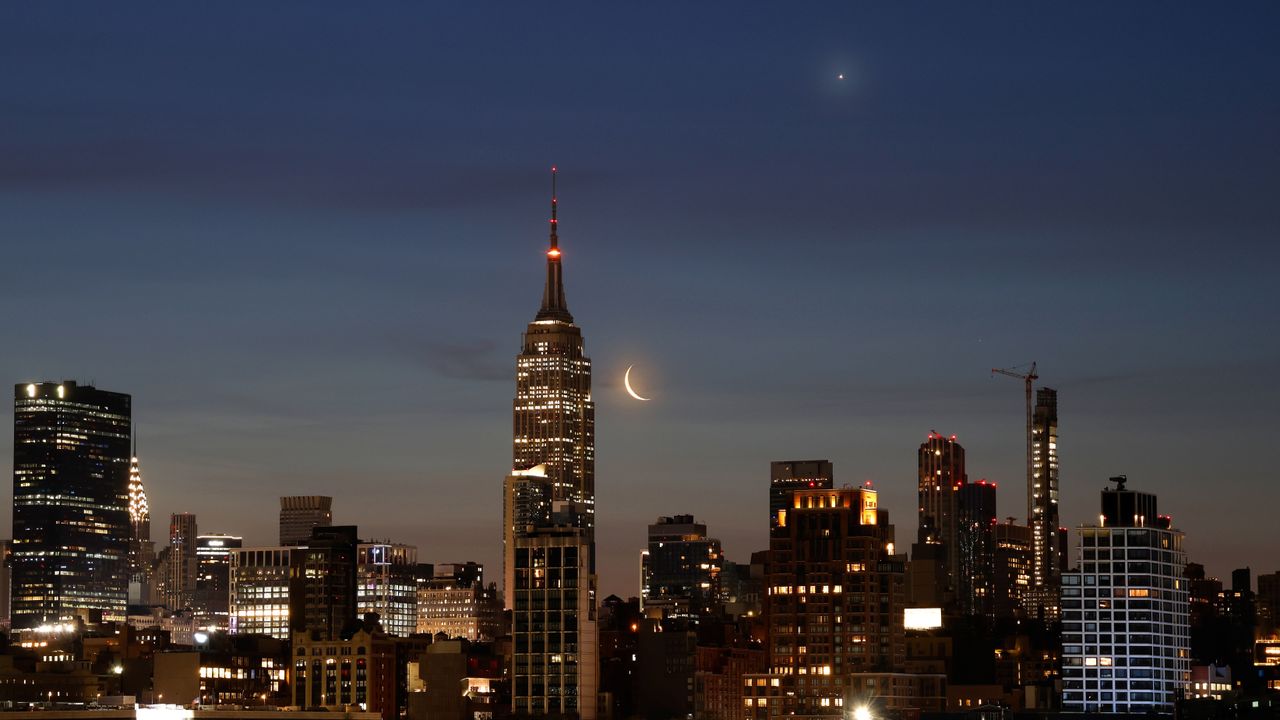
Early risers on May 14 are in for a treat as the waning crescent Moon glides into a tight triangle with Mars and Saturn. This rare cosmic triangle will grace the pre-dawn sky, visible to the naked eye but even more stunning through binoculars. The three objects appear close together in the east-southeastern horizon about 45 minutes before sunrise.
The Key Players
The razor-thin crescent Moon, just 4% illuminated, will serve as the anchor point. Below it, you'll spot Saturn shining with a steady, golden hue, while Mars glows a distinct reddish tint slightly to the Moon's upper left. The trio spans about the width of your thumb held at arm's length.
Why This Alignment Matters
Planetary conjunctions—when two or more worlds appear close together—occur regularly, but a tight triangle involving the Moon is less common. This event offers a photogenic opportunity for astrophotographers and a chance to observe the subtle color differences between the three bodies. The Moon's proximity to the planets also helps locate them even in the brightening twilight.
Viewing Tips for May 14
- Check local sunrise time: Start looking about 45–60 minutes before sunrise in your area.
- Find an unobstructed horizon: A clear view to the east-southeast is essential.
- Bring binoculars: They'll reveal Saturn's rings and the Moon's cratered surface.
- Avoid light pollution: A dark location away from city lights enhances visibility.
If you miss this event, the next similar triple conjunction with the Moon won't occur until later in the year. For more future celestial alignments, check our astronomy calendar.
Upcoming Sky Highlights
- May 22: Moon near Jupiter in the morning sky.
- June 3: Mars and Saturn still close, but Moon moves away.
- June 12: Mercury reaches greatest elongation west.
Astrophotography Tips
To capture the triangle, use a tripod and a camera with a telephoto lens (200mm or more). Set your ISO to 400–800 and experiment with exposures of 1–4 seconds. The Moon will be bright, so bracket shots to avoid overexposure. For a detailed guide, see our astrophotography basics article.
Editor's note: Weather permitting, this dawn spectacle promises a memorable start to the day. Share your images with us on social media using #CosmicTriangle.
Related Articles
- Underrated Anime ‘A Hundred Scenes of Awajima’ Captures Spotlight-Seeking Human Nature in Stunning Detail
- Travel as Anti-Aging Therapy? New Study Reveals Surprising Biological Benefits
- Three Tech Trends Reshaping Our Future: IVF Innovations, Balcony Solar, and the Rise of AI Resistance
- Gold Digging Isn't Gender-Specific: Study Reveals Both Men and Women Chase Wealthy Partners
- 10 Game-Changing Outcomes from the Santa Marta Fossil Fuel Transition Summit
- Turning Plastic Waste Into Clean Hydrogen: Old Car Batteries Power a Circular Solution
- Exploring the Depths: A Guide to Ann Leckie's Radiant Star and the Radch Universe
- China's Satellite Buildout Reshapes Climate Monitoring Landscape