How to Narrow the Gender Gap in GenAI Skills: A Practical Guide Inspired by Coursera’s Latest Report
Introduction
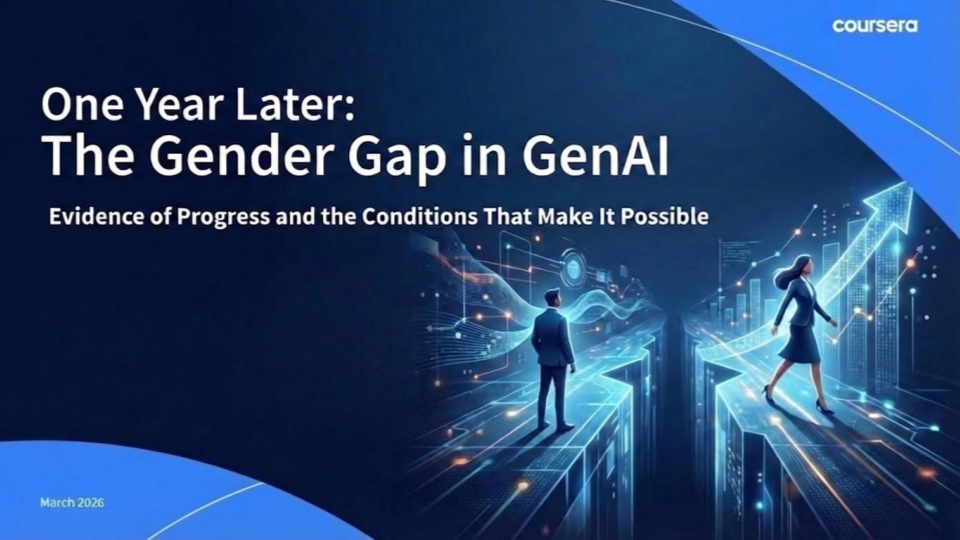
As International Women’s Day approaches, new insights from Coursera reveal encouraging progress in closing the gender gap in Generative AI (GenAI) skills. The report, One Year Later: The Gender Gap in GenAI, shows that women now represent 36% of global GenAI enrollments (up from 32% in 2024), and 42% within enterprise settings. Yet regional disparities persist—Latin America and Asia Pacific are surging, while some English-speaking developed nations are falling behind. This step-by-step guide translates those findings into actionable strategies for organizations, educators, and policymakers committed to equitable skill development.
What You Need
- Data Access: Subscribe to platforms like Coursera for analytics dashboards (or use internal LMS data).
- Leadership Buy-In: A mandate from HR or L&D to prioritize gender equity in tech upskilling.
- Budget & Tools: Funds for course subsidies, mentorship programs, and communication campaigns.
- Cultural Awareness: Understanding of regional dynamics (e.g., Latin America’s community-driven learning vs. developed-market individualism).
- Timeframe: At least 12 months to track year-over-year changes.
Step-by-Step Instructions
Step 1: Benchmark Your Current Gender Gap
Begin by measuring women’s share of GenAI course enrollments in your organization or region. Use a 12-month baseline (e.g., 2024 data) to compare. Coursera’s report shows global women’s share rose from 32% to 36% year-over-year—use similar metrics. Create a simple chart: female enrollments / total enrollments. Identify any initial gap and note whether your figure aligns with the global average or your peer group.
Step 2: Analyze Regional Success Stories
Not all markets are equal. Drill down into high-performing regions. Latin America doubled its share of female GenAI enrollments, with Peru (+14.5 percentage points), Mexico (+5.3), and Colombia (+4.5) leading. In Asia Pacific, Uzbekistan gained +8.8 percentage points, while India (Coursera’s largest GenAI market) rose 2.2 points. Study what makes these regions successful: community scholarships, targeted marketing to women, or government partnerships. For internal teams, segment your data by department, location, or role to replicate those success factors.
Step 3: Amplify Enterprise Learning Pathways
Enterprise learners are closing the gap fastest—women jumped from 36% to 42% of GenAI enrollments on Coursera. If your organization has an enterprise LMS, create dedicated GenAI learning tracks with role-specific content (e.g., for marketers, engineers, data analysts). Offer incentives like digital badges or career progression tie-ins. Encourage managers to personally invite women on their teams to enroll, addressing the confidence gap identified in research.
Step 4: Address Developed-Market Declines
Be wary of stagnation in English-speaking, economically developed countries. The US (-0.9 points), Canada (-1.0), UK (-1.8), Spain (-1.1), and Germany (-0.2) all saw women’s share drop. To reverse this, combat complacency: launch awareness campaigns about the $22.3 trillion economic opportunity by 2030 (IDC data). Create women-only study groups or partner with professional women’s networks. Emphasize that GenAI skills are not just for coders—critical thinking and human competencies are equally essential.
Step 5: Foster a Supportive Learning Culture
Beyond enrollment numbers, ensure retention and completion. Women may face stereotype threat or imposter syndrome in male-dominated tech spaces. Provide visible role models, flexible deadlines, and safe practice environments (e.g., sandbox projects). Use internal anchor links (see Tips below) to share peer testimonials. Celebrate small wins—Coursera’s report shows that progress is nonlinear but cumulative.
Step 6: Track and Iterate Quarterly
Set up a quarterly review cycle. Re-measure women’s share of enrollments, completion rates, and post-training application (e.g., projects or promotions). Use the same metrics as Step 1. If your numbers lag, revisit Steps 2–5. For example, if Latin American tactics boosted female enrollments, try adapting their community-based approach to your context. The goal is to move from 36% toward parity (50%), recognizing that even small annual gains compound.
Tips for Maximum Impact
- Leverage International Women’s Day Momentum: Launch your initiative around March 8 to gain visibility and support.
- Combine GenAI with Critical Thinking: The report highlights that essential human skills are even more valuable when paired with AI literacy.
- Focus on Non-Traditional Learners: Women returning to work after a career break or switching fields are an untapped demographic.
- Use Data Storytelling: Present enrollment trends visually (e.g., Peru’s 14.5-point jump) to inspire action.
- Avoid Stereotyping: Frame the gender gap as an opportunity, not a deficiency. Emphasize that men and women both need these skills.
- Partner with Regional Champions: In Latin America and Asia Pacific, local universities or NGOs can vouch for the value of GenAI training.
Closing the GenAI gender gap isn’t just about fairness—it’s about ensuring the $22.3 trillion economic boost benefits everyone. By following these steps, you can turn Coursera’s encouraging global trend into local reality.
Related Articles
- Python Memory Management Explained: Q&A
- Building a Team Learning Loop from AI Development Sessions
- Understanding Reward Hacking in Reinforcement Learning
- 9 Proven Strategies to Land Your First Cloud or DevOps Job
- Educator Voices Reshape the Future of Learning: Meet the 2026-27 ISTE+ASCD Fellows
- AWS Unveils AI Agent Revolution: Quick Desktop App and Four New Connect Solutions Reshape Enterprise Operations
- Digital Nomads Face Infrastructure Crisis: 2026 Tools Revealed as Backbone of Global Remote Work
- Agentic Pair Programming for Data Science: Exploring marimo's Collaborative AI