AI and Energy Synergy: How the Genesis Mission Is Forging American Leadership
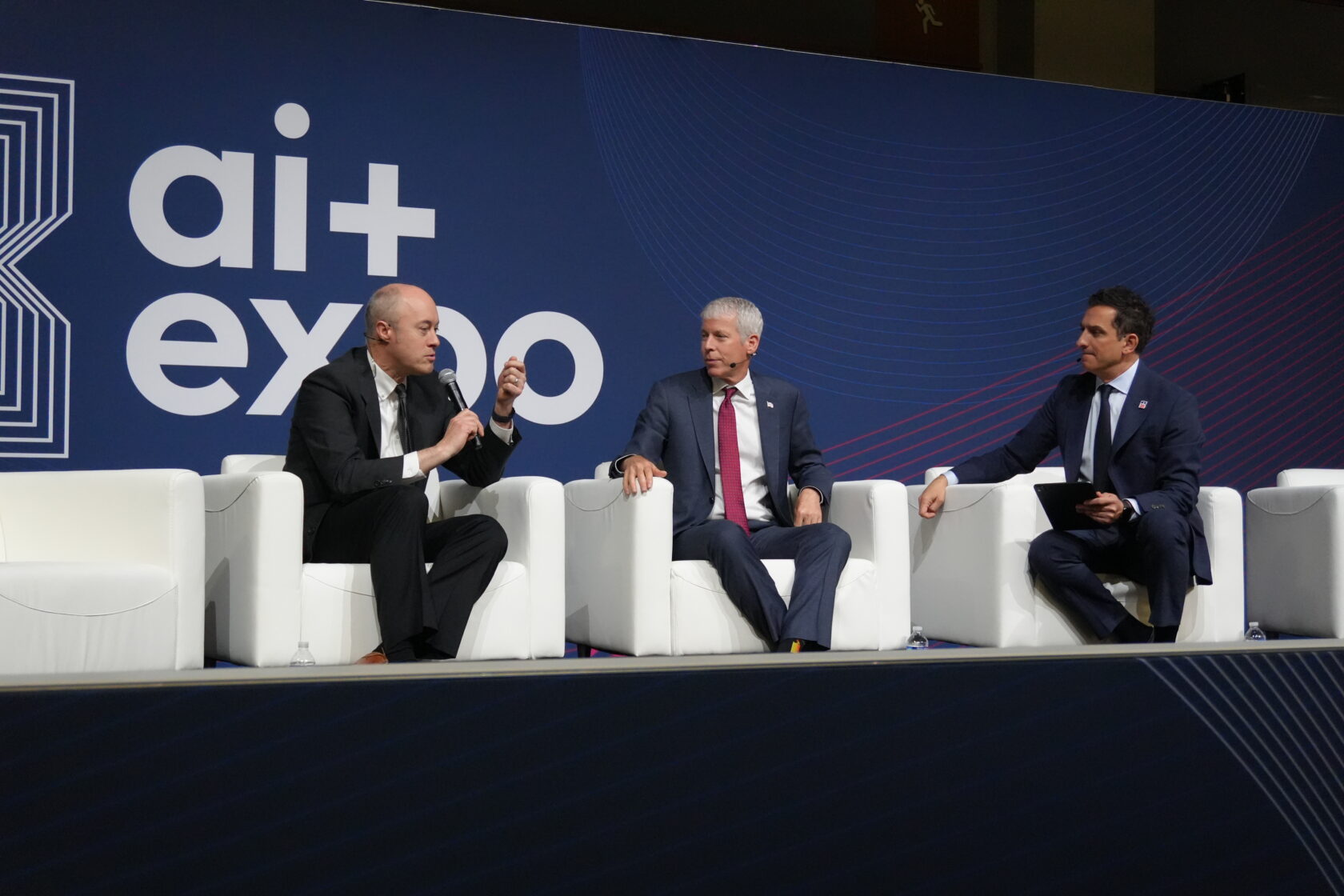
Artificial intelligence is not just a consumer of energy—it is poised to become a key enabler of the power systems of tomorrow. This was the central theme of a fireside chat at the SCSP AI+ Expo, where U.S. Energy Secretary Chris Wright and NVIDIA Vice President of Hyperscale and High-Performance Computing Ian Buck outlined a vision in which American dominance in AI and energy are two sides of the same coin. The conversation, moderated by SCSP President Ylli Bajraktari, focused on the Genesis Mission—a Department of Energy initiative that harnesses AI for scientific discovery—and the critical role NVIDIA is playing in bringing that mission to life.
The Genesis Mission: AI for Scientific Breakthroughs
The Genesis Mission represents the U.S. Department of Energy's ambitious push to integrate artificial intelligence into the fabric of scientific research. By applying AI to challenges ranging from material science to nuclear fusion, the DOE aims to accelerate discovery and maintain America's competitive edge. Secretary Wright emphasized the fundamental link between energy and opportunity: "Energy is life. The more energy you have, and the more affordable it is, the more opportunities your society can unlock."

NVIDIA is a cornerstone partner in this endeavor. Ian Buck noted that the company’s two-decade history of building supercomputers with DOE national labs has created a fertile ground for collaboration. "NVIDIA is 100% committed and invested in Genesis," Buck said. "I have never seen more excitement across the labs and industry." This partnership leverages NVIDIA's full-stack expertise—not just hardware, but algorithms, methods, and a deep understanding of scientific computing.
The DOE-NVIDIA Collaboration
The DOE brings to the table 17 national laboratories, a wealth of scientific talent, pressing national problems, and massive datasets. NVIDIA contributes the compute and software infrastructure. Together, they are constructing two of the world’s most powerful AI supercomputers at Argonne National Laboratory: Equinox and Solstice.
Building the Next Generation of AI Supercomputers
Equinox, currently being deployed, features 10,000 NVIDIA Grace Blackwell GPUs. According to Buck, "It's the same GPU, the same software being used to train and build AI that we’re all enjoying today." Solstice, the follow-up, will be an order of magnitude larger with 100,000 GPUs based on the upcoming NVIDIA Vera Rubin architecture. Buck put the scale into perspective: "To put that 100,000 in perspective on the next-generation GPU, which is dedicated to science, it’s 5,000 exaflops. That’s a big number—actually five times larger than the entire TOP500 supercomputer list combined."
These machines are not exclusive to the DOE; they are built from the same hardware and software building blocks used by major AI labs worldwide. "We’re creating all the same technology, all the same hardware, all the same software building blocks used by all the major AI labs around the world, for all of world science to go get access to," Buck explained. This open approach aims to democratize AI for scientific discovery.
AI Models Trained on Scientific Literature
A concrete example of the Genesis Mission in action: NVIDIA has developed an open-source AI model trained on 1.5 million physics papers, then fine-tuned on 100,000 papers specifically about nuclear fusion. The result is a specialized AI agent that DOE researchers can query to accelerate their work. This demonstrates how AI can digest vast amounts of scientific knowledge and provide targeted insights.
Energy: The Foundation of AI and American Prosperity
Secretary Wright underscored that energy abundance is the bedrock of any advanced society, and AI is no exception. The more affordable and plentiful the energy, the more AI can be deployed for good. He noted that over the past two decades, the U.S. has seen transformative changes in energy production, which now need to be matched by a pace of building that keeps up with AI’s growing demands.
The Genesis Mission directly addresses this by using AI itself to improve energy systems—from optimizing grid operations to accelerating fusion research. As Buck put it, "AI will help build the energy it needs." This symbiotic relationship between AI and energy is at the heart of maintaining U.S. leadership in both domains.
Looking Ahead: A Shared Vision
The fireside chat was part of a broader SCSP AI+ Expo that featured several NVIDIA leaders: cofounder Chris Malachowsky on AI careers, Rev Lebaredian on physical AI and simulation, Dion Harris on AI-accelerated American science and AI infrastructure for Africa, and John Josephakis on U.S. quantum leadership. Together, these sessions painted a picture of an AI-driven future that is deeply integrated with national infrastructure and scientific progress.
As the Genesis Mission moves forward, the partnership between the DOE and NVIDIA exemplifies how public-private collaboration can tackle grand challenges. The message from Wright and Buck was clear: American leadership in AI runs through American leadership in energy, and with initiatives like Genesis, that future is being built today. The excitement Buck alluded to is palpable, and with supercomputers like Equinox and Solstice coming online, the next American century will be powered by innovation, science, and abundant energy.
Related Articles
- Massachusetts Offshore Wind Breakthrough: 5 Ways It Saves You $1.4 Billion
- Juiced Bikes Reboots Market Entry Amid Semi-Solid State Battery Breakthroughs
- From Sea of Nodes to Control-Flow Graph: The Evolution of V8's Optimizing Compiler
- EPA Backtracks on Methane Flaring Deadline, Permits Continued Emissions
- How to Assess Tesla's Ambitious Humanoid Robot Sales Target
- Macfox X7 E-Bike Emerges as Street-Legal Moped Alternative with UL Certification
- Renewable Energy Retailer Inks Landmark Deal with Hybrid Solar-Battery Plant to Power Organic Recycling Operations
- How to Connect with the Flutter Core Team at Global Events in 2026