10 Surprising Upgrades Await Your Old Google Home Mini With This $85 Hack
If you have a first-generation Google Home Mini gathering dust, you are not alone. Millions of these compact smart speakers were sold after 2017, but they have since reached the end of their supported lifecycle. While the hardware still works for basic voice commands, it lacks local processing power and customizability. Enter an $85 PCB from MiciMike that breathes new life into the device, effectively upgrading it to 2026 standards. This article explores ten key aspects you need to know about this clever retrofit, from the dual-processor setup to its privacy-focused design.
1. Why Your Google Home Mini Needs a Second Life
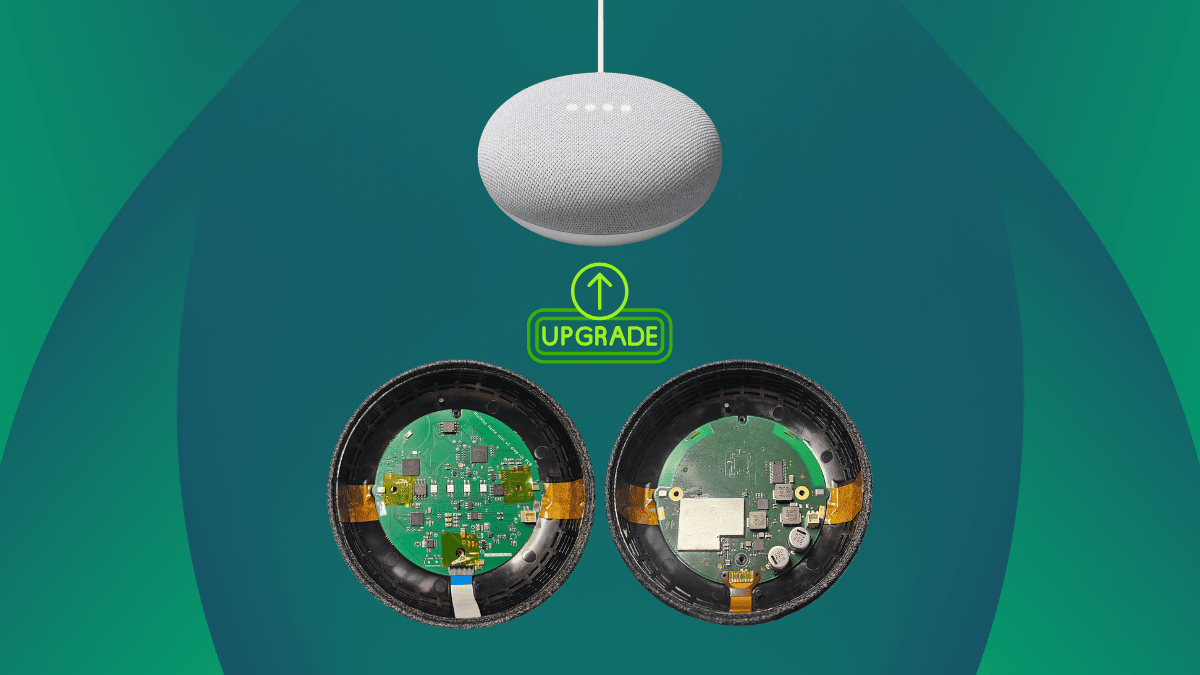
The original Google Home Mini was a breakthrough for its price, but time has made it obsolete. Google discontinued the Nest Mini, its successor, and the device no longer receives major software updates. Without any local processing, every voice command must travel to the cloud, creating delays and privacy concerns. The speaker's hardware remains largely functional, but its software is stuck in the past. This $85 PCB replaces the outdated internal board, transforming the Mini into a modern, locally capable smart assistant. By swapping only the core electronics, you retain the original speaker, mute button, and enclosure, giving the hardware a second lease on life while reducing e-waste.
2. The Core Processor: ESP32-S3 Brings Modern Power
At the heart of the upgrade is an Espressif ESP32-S3 chip, a dual-core Xtensa LX7 processor running at 240 MHz. This microcontroller handles Wi-Fi, Bluetooth, and wake word detection locally using microWakeWord. With 8 MB of PSRAM and 16 MB of flash memory, it can run complex automations without cloud dependency. The ESP32-S3 is widely supported in the maker community, meaning you can extend functionality with custom firmware or integrate it into smart home systems like Home Assistant. Its low power consumption also ensures the device stays cool and energy efficient, making it ideal for always-on listening.
3. Dedicated Audio Processing With the XMOS XU316
Voice quality is critical for a smart speaker, and the MiciMike board pairs the ESP32-S3 with an XMOS XU316 chip solely dedicated to audio. This processor contains 4 MB of its own flash and runs advanced noise cancellation and echo suppression algorithms. Two onboard MEMS microphones feed audio into the XU316, which cleans the signal before sending it to the main processor or cloud. The result is clear voice recognition even in noisy environments, matching or exceeding the original Mini's performance. Because audio processing happens locally, privacy is enhanced while maintaining responsiveness.
4. Seamless Connectivity: Wi-Fi and Bluetooth 5.0
The upgrade board supports Wi-Fi 802.11 b/g/n on 2.4 GHz and Bluetooth 5.0 Low Energy. This modern connectivity ensures reliable communication with your home network and low-latency audio streaming. The ESP32-S3 handles both standards natively, so you can stream music via Bluetooth to the speaker or control it through Wi-Fi using apps like Home Assistant. The 2.4 GHz band is sufficient for smart home devices and provides good range. Bluetooth 5.0 LE also enables beacon features and low-energy communication with sensors, broadening the device's use cases beyond a simple voice assistant.
5. Preinstalled Software: ESPHome Out of the Box
One of the biggest hurdles for DIY upgrades is programming the firmware. MiciMike solves this by preinstalling ESPHome, an open-source framework that integrates seamlessly with Home Assistant. With ESPHome, you can configure the board using simple YAML files, enabling features like voice control Assist, multi-room audio via Music Assistant, and synchronized playback with Snapcast. The board is ready to use immediately after assembly, no soldering or coding required. You can even add a cloud LLM (large language model) as a conversation agent if desired, but the whole system works perfectly without internet access.
6. Privacy First: Local Voice Processing and Mute Switch
Unlike the original Google Home Mini, which sent all audio to Google's servers, this upgrade keeps voice data on your device. Wake word detection uses microWakeWord running on the ESP32-S3, so no voice sample leaves your home until you explicitly trigger a command. The hardware mute button physically disconnects the microphones at the circuit level, just like the original design. This combination gives you complete control over when the device listens. For privacy-conscious users, this is a major selling point, turning a cloud-dependent speaker into a local smart assistant that respects your data.

7. Visual Feedback: Four RGB LEDs for Status
To replicate the original Mini's appearance, the PCB includes four SK6812 RGB LEDs placed in the same positions as the stock indicators. These LEDs can show different colors and brightness levels to indicate the device's state: listening, processing, mute, or errors. ESPHome allows you to customize LED behavior, so you can match your home's aesthetic or create visual alerts for events like doorbell rings or weather updates. The SK6812 is individually addressable, enabling smooth animations. This visual feedback makes the upgraded Mini feel polished and user-friendly, not like a hack.
8. Easy Installation: Keep Your Original Speaker and Cables
Installing the new PCB is straightforward. You open the Google Home Mini case, disconnect the original board, and replace it with the MiciMike board. The package includes a flexible printed circuit (FPC) cable that reconnects the original speaker, so you retain the same audio output quality. The PCB dimensions are 72 × 70 mm, a 4-layer design with HASL lead-free finish, fitting perfectly into the Mini's enclosure. No drilling or permanent modifications are needed, making it reversible if you ever want to restore the original. The setup takes about 15 minutes for most users.
9. Open-Source License and Community Support
MiciMike released this hardware under the CERN Open Hardware License (CERN-OHL-S), a strong copyleft license that promotes sharing and modification. This means you can build your own board if you have the skills, or contribute improvements back to the community. The ESP32-S3 and XMOS chips have extensive documentation and online forums, so help is available for advanced customizations. Open-source software like ESPHome and Home Assistant ensures the project won't become abandoned; it lives on as long as the community supports it. This transparency is a key advantage over proprietary smart speakers.
10. Future-Proofing: Ready for 2026 and Beyond
By replacing the aging processor with a modern dual-core system, this upgrade ensures your Google Home Mini remains useful for years. The ESP32-S3 is widely used in IoT applications and will receive firmware updates from Espressif for the foreseeable future. The board's ability to run local AI models (via optional cloud LLMs) means it can adapt to new smart home standards. Whether you use it as a voice assistant, a multi-room audio player, or a home automation hub, the $85 investment prevents another device from ending up in a landfill and gives you a fully featured, private smart speaker.
In conclusion, the MiciMike Home Mini PCB is a remarkable example of how open hardware can extend the life of consumer electronics. For $85, you get modern processing, local voice control, and full privacy, all while keeping your old device out of the trash. The integration with Home Assistant and ESPHome makes it accessible to both beginners and tinkerers. If you have a retired Google Home Mini, this upgrade is one of the best ways to bring it into the modern smart home ecosystem.
Related Articles
- 10 Essential Facts About Windows 11 Version 25H2 and Its Latest Updates
- How Long-Running AI Agents Outgrow HTTP: Ably's Durable Session Solution
- Python 3.14.3 and 3.13.12 Arrive: Key Improvements and New Features
- Streamlining Team Knowledge with Private Q&A: Introducing Stack Overflow for Teams
- React Native 0.82: The Shift to a New Architecture Era
- Navigating the New Cybersecurity Landscape: A Guide to AI-Generated Vulnerabilities
- Reverse Engineering the Commodore Sync Splitter: A Masterclass in 8-Bit Video Design
- Eye's Hidden Vascular Network Reveals Critical Role in Vision, Experts Say