The Photon Balancing Act: A Guide to Plant Cellular Light Regulation
Overview
Plants perform a delicate dance every moment they are exposed to sunlight. Unlike humans, who can simply move indoors when the sun becomes too intense, plants must remain rooted in place and adapt to constantly changing light conditions. From the gentle glow of dawn to the scorching midday sun, and from dappled shade to a sudden clearing, plants face a challenge: how to harvest enough energy for growth without suffering damage from excess light.
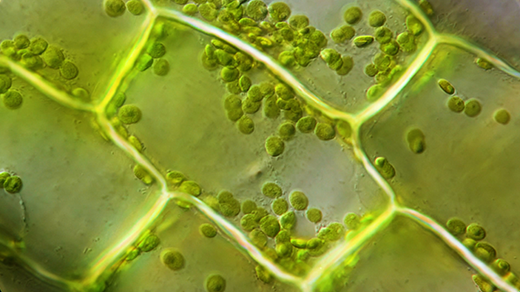
This tutorial explains the mathematical principles underlying the cellular mechanisms that allow plants to regulate photosynthesis in real time. We'll explore the feedback loops, signal cascades, and molecular switches that constitute what scientists call the hidden mathematical dance inside plant cells. By the end of this guide, you'll understand how plants achieve this remarkable balancing act and why it's essential for their survival.
Prerequisites
To get the most out of this tutorial, you should be familiar with:
- Basic concepts of photosynthesis (light reactions, Calvin cycle)
- Understanding of cell structures (chloroplasts, thylakoid membranes)
- Elementary algebra and concept of feedback (no advanced math required)
- Curiosity about how living systems optimize performance
No prior knowledge of plant molecular biology is assumed. We'll introduce key terms as needed.
Step-by-Step Instructions: The Dance of Light Adaptation
The process can be broken down into four main phases: sensing, signaling, adjustment, and recovery. Each phase involves mathematical relationships that govern the plant's response.
Step 1: Light Sensing and the Trigger Threshold
Plants detect light intensity using specialized proteins, particularly photoreceptors like phytochromes and cryptochromes, and through the redox state of the photosynthetic electron transport chain. The key mathematical concept here is a threshold.
When light intensity exceeds a certain value, the plant must activate protective mechanisms. This threshold is not fixed; it varies with time and previous light exposure. Mathematically, we can model it as a dynamic threshold function:
threshold(t) = baseline + adaptation_factor(t)where adaptation_factor increases after prolonged high light and decreases during shade. This prevents unnecessary activation of protective pathways.
Step 2: Signal Transduction – The Amplification Cascade
Once the threshold is exceeded, the cell initiates a signaling cascade. A classic example is the non-photochemical quenching (NPQ) pathway. Excess light energy excites chlorophyll molecules, leading to the production of reactive oxygen species (ROS) if left unchecked. The cell responds by converting the energy into heat through the xanthophyll cycle.
The cascade can be represented as a logarithmic response curve. Small increases in light above the threshold trigger large changes in protective pigment conversion. This ensures rapid response to potentially damaging light spikes:
NPQ_level = k * log(light_intensity / threshold)If you are familiar with plant biology, think of this as the violaxanthin → zeaxanthin conversion under high light and the reverse under low light.
Step 3: Gene Expression Changes – The Slower Step
While NPQ acts within minutes, long-term adaptation requires changes in gene expression. For example, plants grown in high light produce more light-harvesting complex (LHC) proteins to capture photons efficiently but also more protective proteins like PsbS.
This step involves a negative feedback loop. The signal from the chloroplast (retrograde signaling) influences nuclear gene expression. The mathematical model resembles a differential equation where the rate of change of mRNA concentration depends on light signal minus degradation:
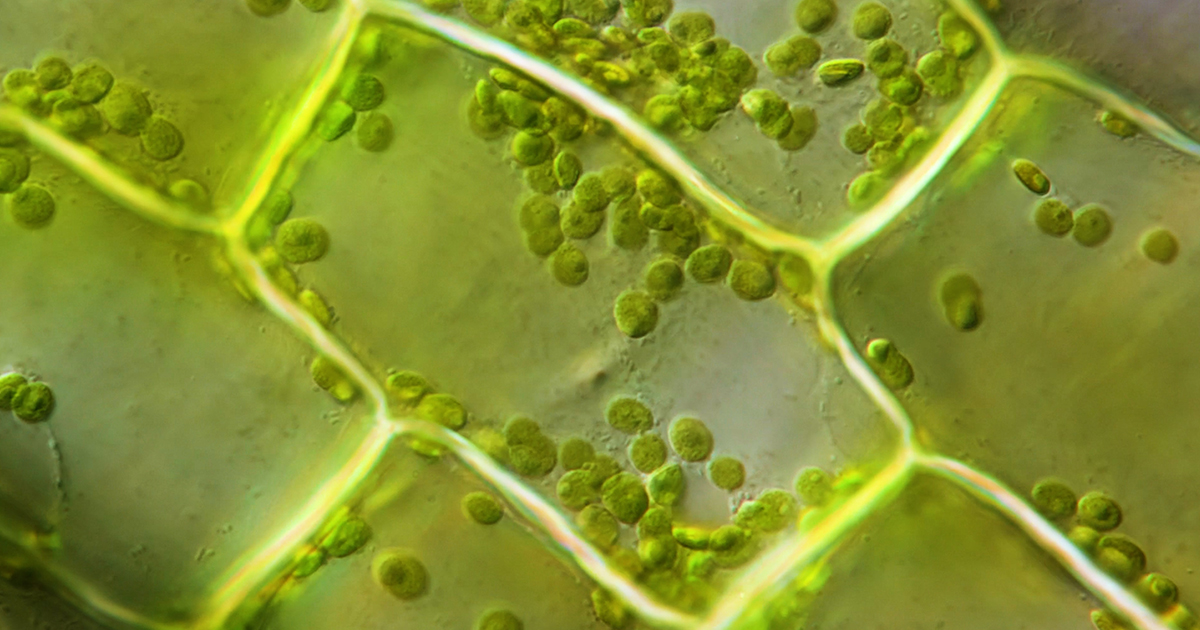
dmRNA/dt = production_rate * signal – degradation_rate * mRNAThe steady-state solution gives the final adapted level. If light increases, signal increases, leading to more mRNA, which then downregulates the signal source – a classic dance of balance.
Step 4: Recovery and Memory – The Hysteresis Effect
When light drops back to normal or low levels, the cell does not immediately revert to its pre-adaptation state. It retains a memory of the previous stress, often modeled as hysteresis. This means the state of the system depends on its history.
In practical terms, a plant that has experienced high light will remain more protective for some time even after the stress passes. Mathematically, you can think of it as a system with two stable states: one with high protection and one with low, and the transition thresholds are different when going up versus going down.
This can be visualized with a simple plot: light intensity on X-axis, NPQ level on Y-axis. The curve forms a loop when light increases and then decreases.
Common Mistakes
- Assuming instant response: Many expect plants to react as fast as electronic sensors. In reality, molecular changes take minutes to hours due to diffusion and gene expression. The mathematical models include time delays that are often ignored by beginners.
- Ignoring multiple feedback loops: Plants coordinate several pathways (NPQ, state transitions, photorespiration, chloroplast movement) simultaneously. Focusing on only one gives an incomplete picture.
- Overgeneralizing from lab conditions: Most mathematical models are built from controlled experiments with stable light. In nature, plants face dynamic light fluctuations – clouds, leaves moving in wind – so the models need stochastic components.
- Forgetting the cost: Protective mechanisms like NPQ consume energy and resources. An overzealous plant that constantly activates protection may grow slower. The optimal response balances risk and reward.
Summary
Plants have evolved a sophisticated suite of mechanisms to deal with the dangerous variability of sunlight. This tutorial walked through the key steps of the hidden mathematical dance: light sensing with dynamic thresholds, logarithmic amplification of signals, negative feedback in gene regulation, and hysteresis for memory. Understanding these principles helps us appreciate plant resilience and can inspire better agricultural practices and artificial photosynthesis designs.
Remember: the next time you see a leaf basking in the sun, it's not just passively soaking up rays – it's executing a complex algorithm of survival.
Related Articles
- Revolutionary Custom Mainboard Brings PlayStation 2 into Handheld Era
- How GameStop Attempted to Acquire eBay in a $55.5 Billion Deal: A Step-by-Step Breakdown
- How Not to Let an AI Agent Run Your Café: Lessons from the Google Gemini Bot Experiment
- 8 Smart Reasons to Buy a Complete RTX 5090 Gaming PC for Under $4,000 Instead of a Standalone GPU
- Beyond the Battle: How Pokémon TCG Chaos Rising Elevates Art Over Gameplay
- Roblox's Photorealism Push: Why Developers Aren't Sold on AI-Powered Graphics
- Nintendo Reveals Mineru's Construct amiibo for Zelda: Tears of the Kingdom, Launching This September
- Turning a PlayStation 5 into a Full Linux Gaming Rig: How It Works and What You Need to Know