How Plants Harness Mathematical Precision to Survive Light's Chaos
Introduction
Plants live on the edge of a dangerous game: they must convert sunlight into energy while enduring its erratic intensity—from soft morning rays to blazing noon, through sudden shade and open glare. This constant flux demands an invisible, mathematical choreography inside every cell. In this guide, we'll decode the step-by-step process plants use to balance light capture, energy management, and carbon fixation—a hidden dance that ensures survival under the sun's whims.
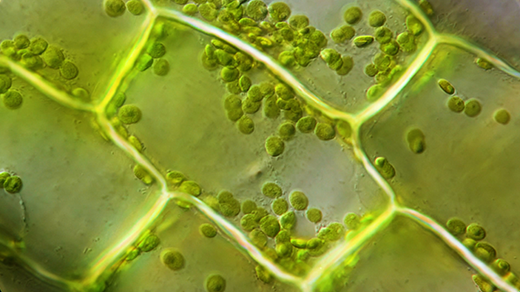
What You Need
To follow this guide, you should have a basic understanding of photosynthesis (including chlorophyll, the electron transport chain, and the Calvin cycle). Familiarity with terms like Rubisco, non-photochemical quenching, and feedback loop will help. Most importantly, bring curiosity about how living systems perform complex calculations without a brain.
Step-by-Step Guide: The Mathematical Dance
Step 1: Sense the Light Environment with Photoreceptors
The dance begins when specialized proteins called photoreceptors (such as phytochromes, cryptochromes, and phototropins) detect changes in light quality and quantity. These sensors monitor not just brightness but also spectral composition—like ultraviolet vs. far-red. They trigger rapid signals that prepare the cell for adjustment. For example, when a cloud passes, a drop in blue light is sensed within seconds, initiating a cascade of protective responses before damage occurs.
Step 2: Regulate Light-Harvesting Complexes (LHCs)
Next, the cell must manage the collecting antennas—the light-harvesting complexes embedded in the thylakoid membrane. Under intense light, plants dissociate some LHCs from the reaction centers to reduce absorption. This is a structural shift, not just a chemical one. The movement of LHCII (the main antenna) between photosystem II and photosystem I is a precise geometric rearrangement, akin to pulling back a net to prevent overfishing. This step is critical to avoid saturating the electron transport chain.
Step 3: Activate Non-Photochemical Quenching (NPQ)
Excess energy that slips through must be safely dissipated as heat—a process called non-photochemical quenching. The cell converts harmful excited chlorophyll states into harmless thermal energy via the xanthophyll cycle. This involves the interconversion of violaxanthin to zeaxanthin, a molecular switch that tunes the antenna’s quenching capacity. Mathematical models show that NPQ kinetics follow a sigmoidal curve: fast activation in high light, slower relaxation in low light—a delay that optimizes energy use over minutes.
Step 4: Balance Electron Transport Chain Dynamics
The electron transport chain (ETC) acts as a current that must not overflow. Plants adjust the ratio of linear vs. cyclic electron flow. Cyclic flow around photosystem I generates ATP without NADPH, helping balance the ATP/NADPH ratio required for the Calvin cycle. This is a real-time mathematical optimization: the cell calculates the exact energy currency needed and reroutes electrons accordingly. The decision depends on internal signals like the pH gradient across the thylakoid membrane and the redox state of plastoquinone.
Step 5: Fine-Tune Carbon Fixation Kinetics
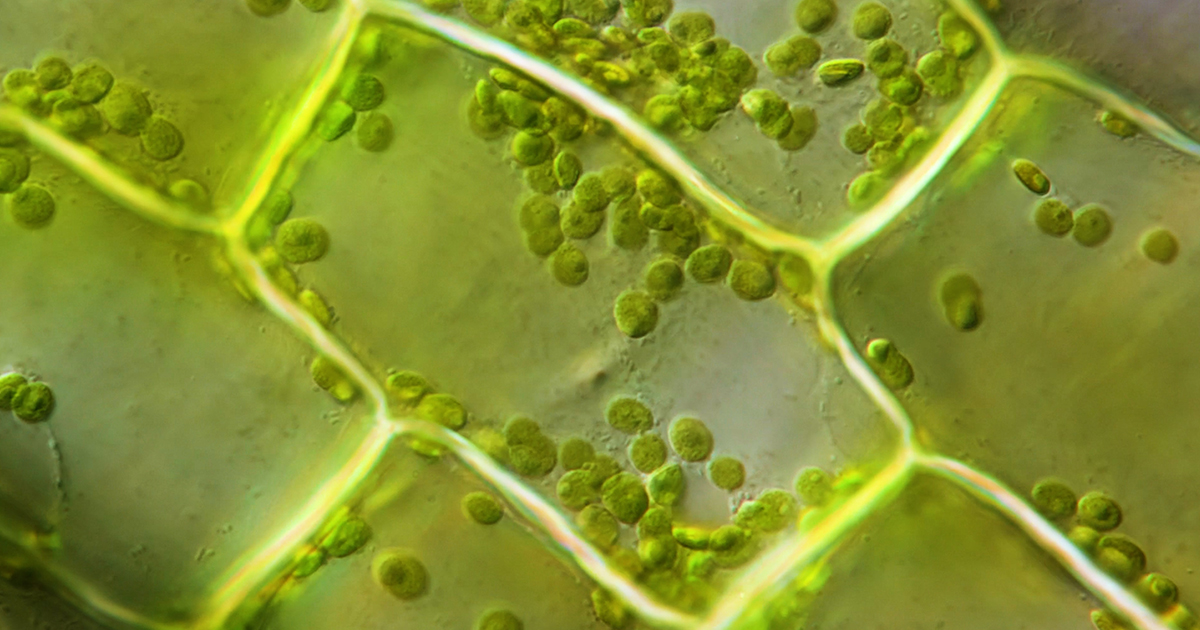
Rubisco—the enzyme that fixes CO₂—is notoriously slow and easily fooled by oxygen. Plants counter this by adjusting Rubisco activase activity, which removes inhibitory sugar phosphates. Under low light, Rubisco is partially deactivated to save energy; under high light, it's fully reactivated. This on-off switching is governed by a feedback loop involving the concentration of RuBP (ribulose-1,5-bisphosphate) and the ATP/ADP ratio. The entire Calvin cycle runs like a finely tuned feedback engine.
Step 6: Implement Long-Term Feedback Loops and Memory
Beyond immediate adjustments, plants maintain a memory of past light stress through epigenetic marks and sustained NPQ components. This allows them to anticipate similar conditions—for example, remembering that cloudy afternoons often follow sunny mornings. Gene expression changes over hours, altering the abundance of LHC proteins, Rubisco, and antioxidants. This anticipatory regulation is governed by a set of oscillating signals (including circadian clocks) that create a predictive model of the light environment.
Tips and Insights
- Tip 1: Appreciate the speed. The initial steps (sensing and quenching) happen in seconds, while gene regulation takes hours. Plants use photoreceptors as ultra-fast triggers.
- Tip 2: Understand the trade-offs. Too much NPQ reduces photosynthetic efficiency; too little risks damage. The plant constantly balances the two.
- Tip 3: Look for quantum effects. Some research suggests that coherence in light-harvesting complexes helps guide energy transfer—a subtle mathematical phenomenon.
- Tip 4: Connect to agriculture. Boosting the mathematical efficiency of these steps could lead to crops that better tolerate variable light, improving yields.
- Tip 5: Remember the ultimate goal. This dance isn't just for survival—it's to maximize net carbon gain over the day, using the sun's unpredictable gift.
By understanding these hidden calculations, you gain respect for the silent, elegant mathematics that keeps the green world alive.
Related Articles
- How eBay Can Save $1.2 Billion by Adopting Bitcoin Instead of Merging with GameStop
- The Blood of Dawnwalker: Breaking Free from Linear Quest Design
- PlayStation Store's Deals Section Disappears: What Gamers Need to Know
- Housemarque's 'Saros' Praised for Cosmic Horror Combat, But Roguelite Mechanics Divide Critics
- Mastering The Blood of Dawnwalker: A Guide to Its Freeform Structure and Speedrun Potential
- Next-Gen Xbox Controller Leak Hints at Cloud Gaming Focus with Wi-Fi Direct Support
- Final Fantasy 14 Housing: Recreating Pragmata’s Shelter with Ingenious Furniture Placement
- How Stellaris Achieved a Decade of Success: A Guide to Long-Term Game Development